Religious Liberty: the Canary in the Mine of Conscience and Freedom
Religious liberty is the first freedom to falter when democracy’s air turns thin. Its decline signals not the triumph of tolerance, but rather a quiet suffocation of conscience—the moment when pluralism gives way to moral uniformity, and the soul itself falls under supervision.

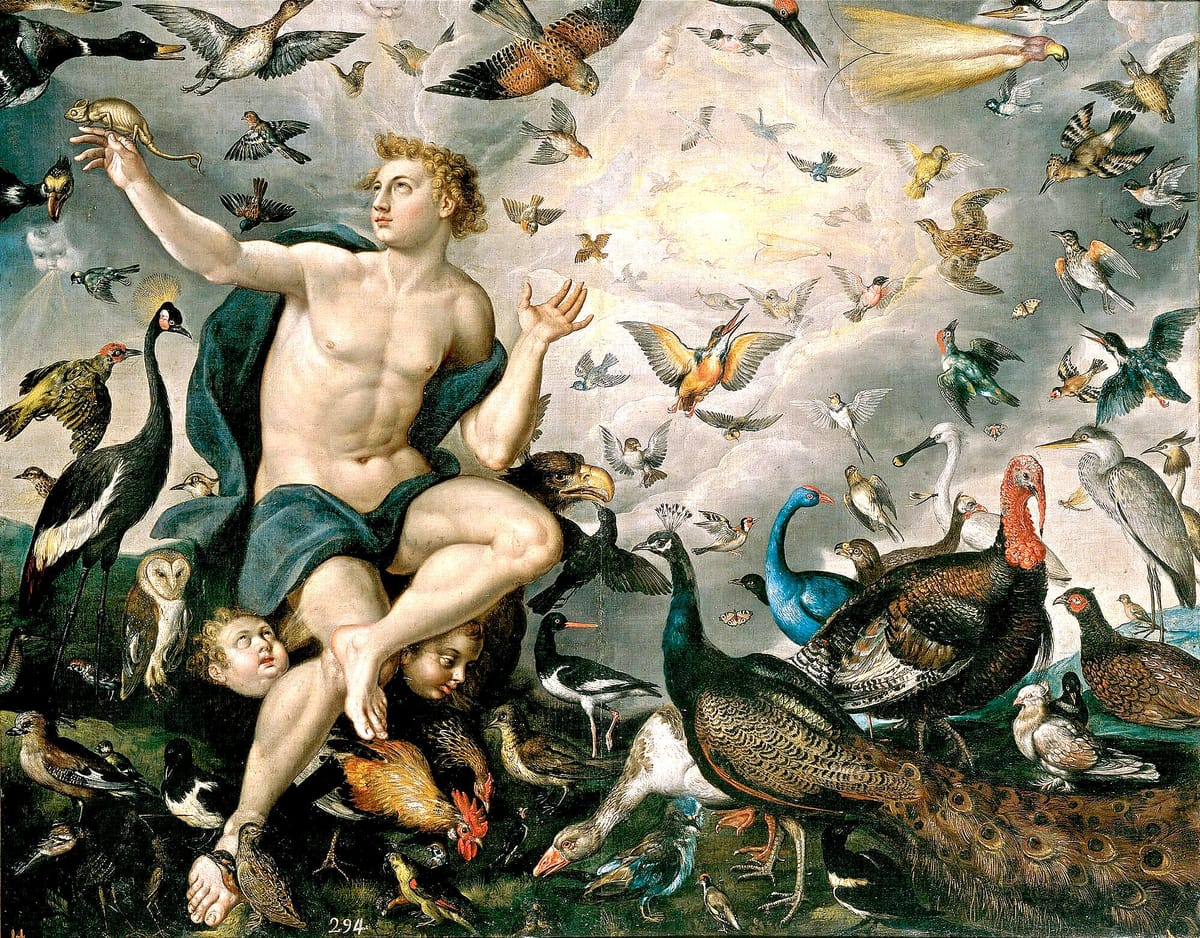
In the gray dawns of the industrial age, miners began each descent with a small, fragile companion. The canary, bright against the soot, entered the shaft first. Its silence, more than any sensor or gauge, told them that the air had turned deadly. The bird was not weak; it was sensitive—an early warning that life itself was no longer safe.
So it is with religious liberty. In the architecture of a free society, this freedom functions as democracy’s sentinel species. It is the first to sense toxins in the atmosphere: coercion masked as compassion, tolerance that curdles into conformity. When religious liberty gasps, it signals that every other freedom—speech, association, dissent—is already in danger.
So it is with religious liberty. In the architecture of a free society, this freedom functions as democracy’s sentinel species. It is the first to sense toxins in the atmosphere: coercion masked as compassion, tolerance that curdles into conformity.
Across continents, the canary is already faltering. In some places, believers face open persecution—faith treated as subversion, worship as sedition. In others, the mechanisms are quieter: bureaucratic exclusions, cultural ostracism, the steady translation of conscience into prejudice. The methods differ, but the instinct is the same—the modern state’s unease with divided loyalties, with any authority higher than itself. Yet that very idea of a higher authority—of conscience answering to something beyond government—was a cardinal principle in the American founding, the safeguard that made freedom possible. Whether through overt coercion or the soft tyranny of social conformity, the result is identical: the slow suffocation of the interior life on which all other freedoms depend.
In Democracy in America (1835), Alexis de Tocqueville observed that the most democratic nation on earth was also among the most devout. “Religion,” he wrote, “must be considered the first of their political institutions.” The remark puzzled his contemporaries. To Europeans, religion and liberty were adversaries. For Tocqueville, they were allies: religion anchored the self in something higher than the state, giving citizens the moral stamina to be free.
To Europeans, religion and liberty were adversaries. For Tocqueville, they were allies: religion anchored the self in something higher than the state, giving citizens the moral stamina to be free.
Democracy, he warned, tends toward homogeneity. It flattens social hierarchies, dissolves intermediaries, and leaves the individual alone before the immense power of public opinion. Where aristocrats and guilds once buffered the citizen from authority, equality leaves only the solitary voter, soft before the state’s paternal smile. Despotism, Tocqueville predicted, would be more extensive and mild. It would not break wills—it would soften them.
Religion, to Tocqueville, was the one authority that could resist this “soft despotism.” It taught that there exists a realm the state cannot touch—the soul. By giving moral law an origin beyond politics, religion created the only effective limit on political power. The democratic majority could regulate commerce, but not belief or conscience.
That limit—the recognition that something stands above the state—is the oxygen of liberty. When a society forgets it, the air begins to thin.
That limit—the recognition that something stands above the state—is the oxygen of liberty. When a society forgets it, the air begins to thin.
So, as Tocqueville described religion’s social function, James Madison supplied its philosophical foundation. In his 1792 essay “Property,” Madison expanded the concept beyond material possession: “A man,” he wrote, “has a property of peculiar value in his religious opinions… Conscience is the most sacred of all property.”
It was no metaphor. To Madison, conscience was a form of ownership—an interior dominion into which the state could not lawfully intrude. From that sanctum flowed every outward freedom. Speech, press, assembly: each was the external manifestation of the same principle that began within—the right to think, to believe, to dissent.
The genealogy of liberty thus runs from the altar to the assembly. A government that learns to violate the “property” of conscience will not stop at the pulpit. It will soon dictate the press, the classroom, and the public square. Religious liberty stands first because it marks the threshold where authority must halt.
The tension between equality and liberty is a defining legal conflict of our era. While the headlines often focus on the "culture war" aspects of recent Supreme Court dockets, the underlying constitutional question is structural.
How much distinctiveness will the state tolerate in the intermediate institutions that stand between the individual and the government?
Here we are trying to trace a trajectory from Martinez to 303 Creative, arguing that while the plaintiffs in these cases are religious, the principles at stake—free association, compelled speech, and institutional autonomy—are the bedrock of a diverse civil society.
[...] while the plaintiffs in these cases are religious, the principles at stake—free association, compelled speech, and institutional autonomy—are the bedrock of a diverse civil society.
If the "canary" of religious liberty dies, the air in the mineshaft of pluralism becomes toxic for everyone—secular activists, dissenting artists, and private associations alike.
In 2010, the Supreme Court decided Christian Legal Society v. Martinez, a case that seemed minor at first—a dispute over student-club recognition at a California law school. The Christian Legal Society required its leaders to affirm a statement of faith. The university denied recognition, citing a policy that all student groups must be open to “all comers.” The Court sided with the school. Justice Samuel Alito, in dissent, warned that such logic arms public universities with a handy weapon for suppressing the speech of unpopular groups. If a group cannot define its membership, it ceases to exist as a distinct voice. Under this reasoning, a feminist club could be forced to accept misogynists; a socialist group, capitalists; a religious fellowship, unbelievers. The ruling’s neutrality was illusory. It applied most forcefully to those whose convictions actually mean something.
After Martinez, universities extended the same rules to secular associations. The principle metastasized: belief could no longer be a legitimate basis for belonging. The pluralism Tocqueville celebrated—the web of voluntary associations between individual and state—was replaced by administrative uniformity.
The next stage came when the state ceased merely to regulate association and began to command affirmation. The emblematic case was 303 Creative LLC v. Elenis (2023). Lorie Smith, a web designer in Colorado, argued that the state could not force her to create celebratory wedding websites for certain couples. The Tenth Circuit made a startling admission: the law compelled Smith to speak “contrary to [her] belief,” yet they upheld it anyway to ensure market access. Only when the Supreme Court reversed did the canary draw a breath. The government, wrote Justice Gorsuch, may not compel a person to speak its preferred message. The decision was narrow, but its premise vast: that the human mind is not a public utility.
And it is here were the implications reach far beyond religion. If Smith can be conscripted to produce a message she rejects, so can an atheist designer asked to illustrate Bible verses, or a progressive filmmaker to craft propaganda for causes she detests. Once expression is reclassified as “conduct,” speech itself becomes a public accommodation. And the citizen, whatever her creed, becomes a mouthpiece for the state’s morality.
The same reasoning unfolds at the level of institutions. In Hosanna-Tabor v. EEOC (2012), the Court unanimously affirmed the “ministerial exception,” recognizing the right of churches to choose their ministers without government interference. Chief Justice Roberts was blunt: “The Free Exercise Clause prevents the Government from appointing ministers, and the Establishment Clause prevents it from interfering.” This principle—organizational self-definition—is not uniquely religious. Every mission-driven association depends on it. A Catholic school that cannot require fidelity to its doctrine loses the same autonomy that protects an environmental NGO from hiring a coal lobbyist or Planned Parenthood from employing an anti-abortion activist. If the right to exclude on grounds of belief is abolished, conviction itself becomes illegal discrimination.
The canary in this case is religious. The mine is civil society.
Critics insist that religious liberty has been weaponized—that exemptions for believers now inflict harm on others. They cite Burwell v. Hobby Lobby (2014), where a religious employer objected to funding contraceptive coverage, and the wedding-vendor cases that followed. Legal scholars such as Columbia’s Katherine Franke argue that religious freedom has shifted from a shield to a sword, used to carve out exceptions to general laws.
The claim deserves scrutiny—but its premise rests on an elastic notion of harm. Anti-discrimination law once guarded against concrete exclusion from housing, jobs, or public services. Today, it often treats emotional offense—“dignitary harm”—as equivalent to material injury. If being declined a custom service constitutes legal harm, then every refusal to affirm another’s worldview becomes an act of aggression. In such a world, tolerance is the enforcement of agreement.
If being declined a custom service constitutes legal harm, then every refusal to affirm another’s worldview becomes an act of aggression. In such a world, tolerance is the enforcement of agreement.
Pluralism cannot survive that inflation. To coexist is not to approve. The moment the state compels affirmation, liberty turns performative—a pageant of sincerity under administrative supervision.
The canary’s distress reveals three deeper transformations in Western democracies.
The Collapse of the Private Sphere. Public-accommodations law has expanded into the terrain of expression. The market, once a realm of voluntary exchange, is treated as a civic liturgy in which all must recite the same creed. The distinction between public obligation and private vocation disappears.
The Shift from Conduct to Identity. Modern law adjudicates not behavior but being. To refuse participation in a ceremony or to question an orthodoxy is to be accused of denying someone’s identity. The result is metaphysical absolutism—each claim of identity demands universal assent.
The Secularization Paradox. As traditional religion wanes, new orthodoxies arise. Corporate pledges and mandatory political statements perform the same social function as creeds once did: they define belonging and cast out heresy. As if blasphemy laws had returned—protecting ideologies, not deities.
Regardless of personal beliefs in each of these cases, we can see how these are not separate trends but expressions of a single atmospheric change: the privatization of belief and the public enforcement of conformity. Religious liberty, in this sense, is the test case for whether a society still recognizes interior freedom at all.
Religious liberty, in this sense, is the test case for whether a society still recognizes interior freedom at all.
A mine with a dying canary looks normal. The machinery hums. The walls hold. But the air has turned.
So too with liberal democracy. When the rights of conscience are reduced to exemptions, and those exemptions to inconveniences, the moral architecture begins to hollow out.
The first victims are the devout who refuse to bend; the next are the artists, professors, and journalists who learn to bend without being asked. The final casualty is the idea that the individual possesses any domain of the self beyond the reach of authority.
Madison foresaw the sequence: once the state seizes “the most sacred of all property”—the mind—it will not stop at speech, press, or assembly. For the state that commands belief already commands everything else.
The canary’s silence, then, is not about religion alone—it is about the conditions of human freedom. Religious liberty dies first because it stands at the frontier where power meets the soul. When that frontier is lost, society does not collapse; it solidifies. It becomes orderly, efficient, benevolent—and airless. The management of conscience replaces the self-government of citizens, and the inner life that once limited power becomes one of its instruments.
If conscience is not free, nothing is.
The miners of democracy are still at work—busy, rational, well-ventilated by the illusions of contemporaneity. But somewhere, faintly, the sentinel has stopped singing. Whether we notice in time will determine not the survival of a creed, but the very possibility of breathing freely at all. ◳